

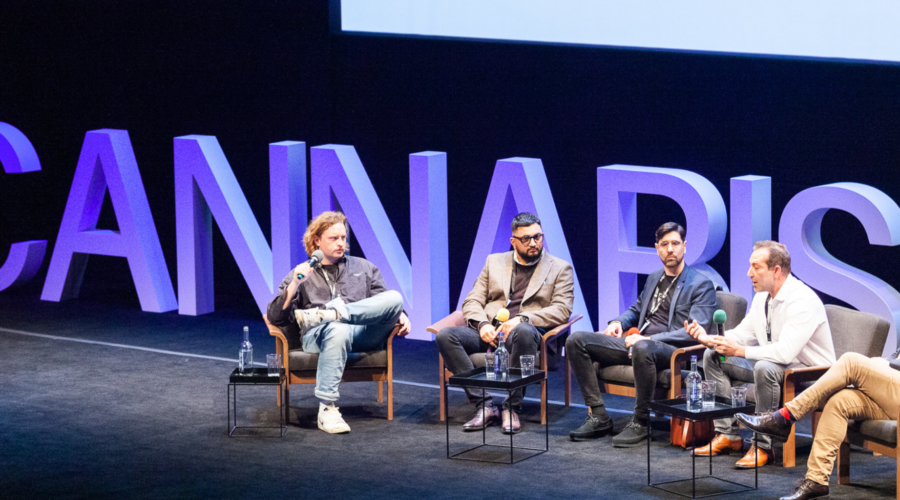
At Cannabis Europa in London, Bloom founder Casey saw a different version of the cannabis industry: one shaped less by promos and potency claims, and more by clinicians, consultation, and structured education. In this founder perspective, Casey reflects on what the American cannabis market can learn from the UK — and why education may be the infrastructure cannabis needs most.
A city within a city

The Barbican in London is a post‑war Brutalist housing estate and arts complex built on a WWII bomb site. More than 2,000 apartments wrap a lake, a music school, the City of London School for Girls, a library, shops, and the Barbican Centre. Built in the 1960s as an optimistic vision for a better society, it feels like a city within a city. Last week, that city within a city hosted Cannabis Europa, one of Europe’s premier B2B cannabis conferences.
I’ve been to a lot of cannabis shows. Many of them blur together: half‑full rooms, panels that feel like reruns, attendees scrolling email while someone onstage talks about “the future of the plant.” I know the pattern well—I’ve been that someone onstage. Cannabis Europa at the Barbican broke that pattern immediately.
A conference that took itself seriously
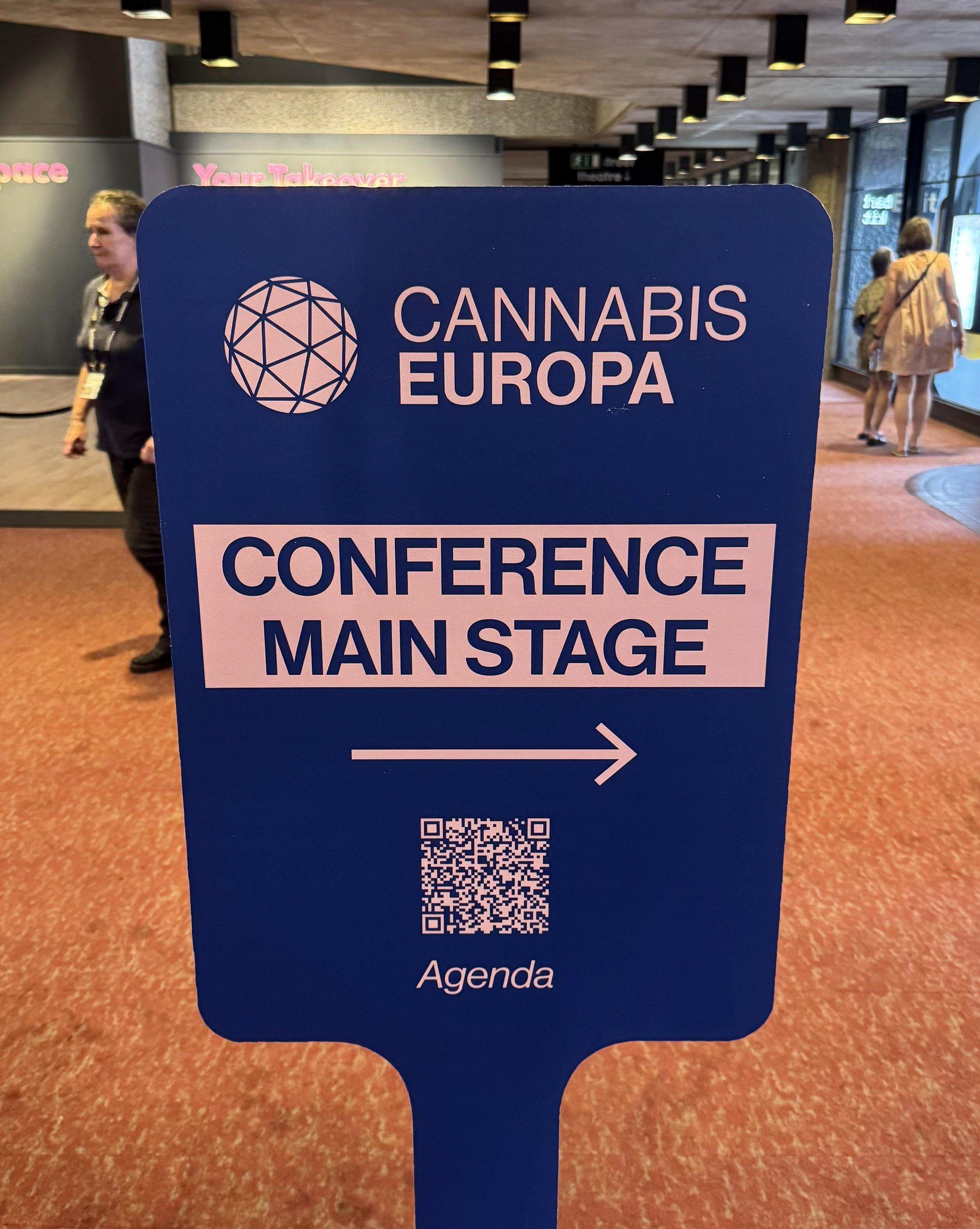
The first clue was registration. No drama, no line snaking through a convention center hallway—just a digital badge printer, a quick scan, and you’re in.
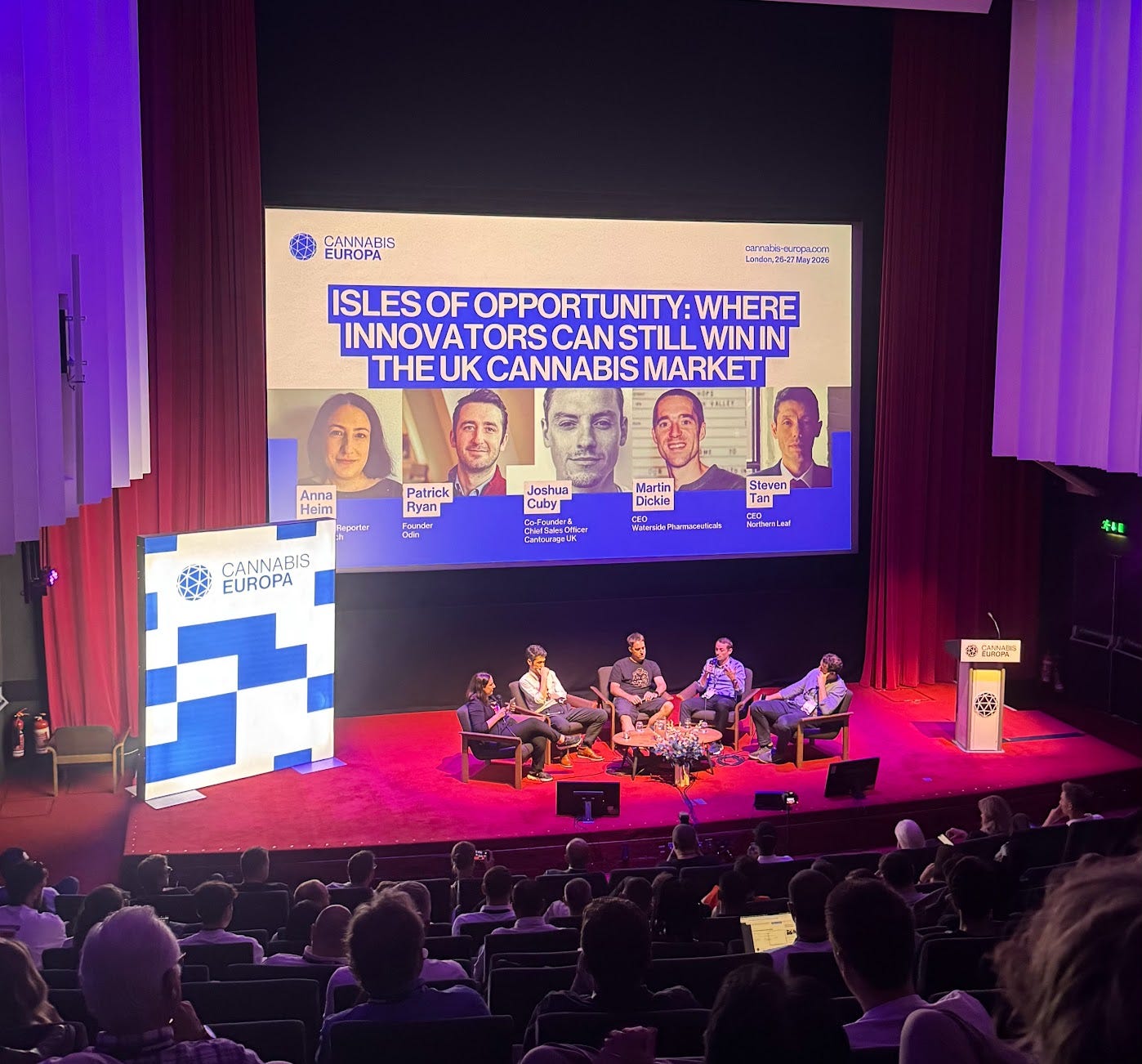
The second clue was the energy. Walking into the Barbican’s cinema theatre for an innovation panel, I could tell this wasn’t background noise. The room was steeply raked, every seat had a clean line to the stage, and every seat was taken. People were actually watching, not hiding behind laptops; some were even taking notes. It felt more like a serious lecture than a trade show time‑kill.
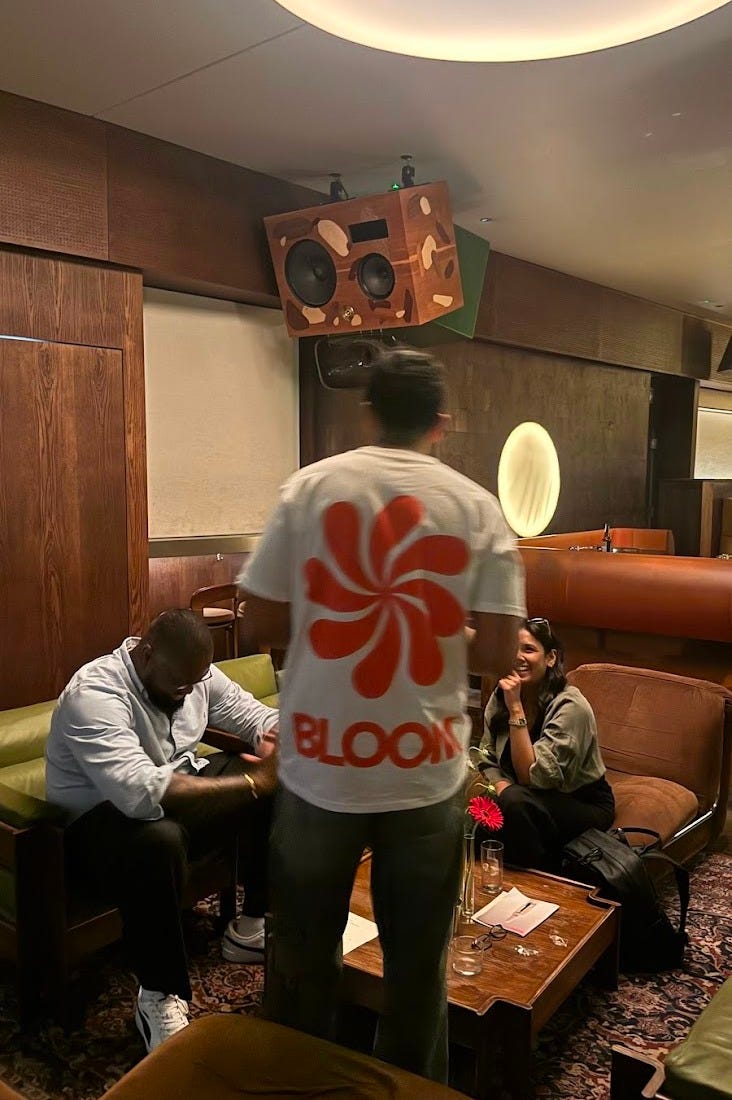
That energy carried into our Bloom “Behind the Formulation” event, where I met clinicians from the UK medical cannabis scene. In the UK, specialized doctors prescribe cannabis, and clinicians—doctors, nurses, pharmacists—fill the role budtenders play in American retail. They guide patients through what they’ve been prescribed, right down to teaching someone how to roll a joint for the first time.
Recreating the Bloom experience
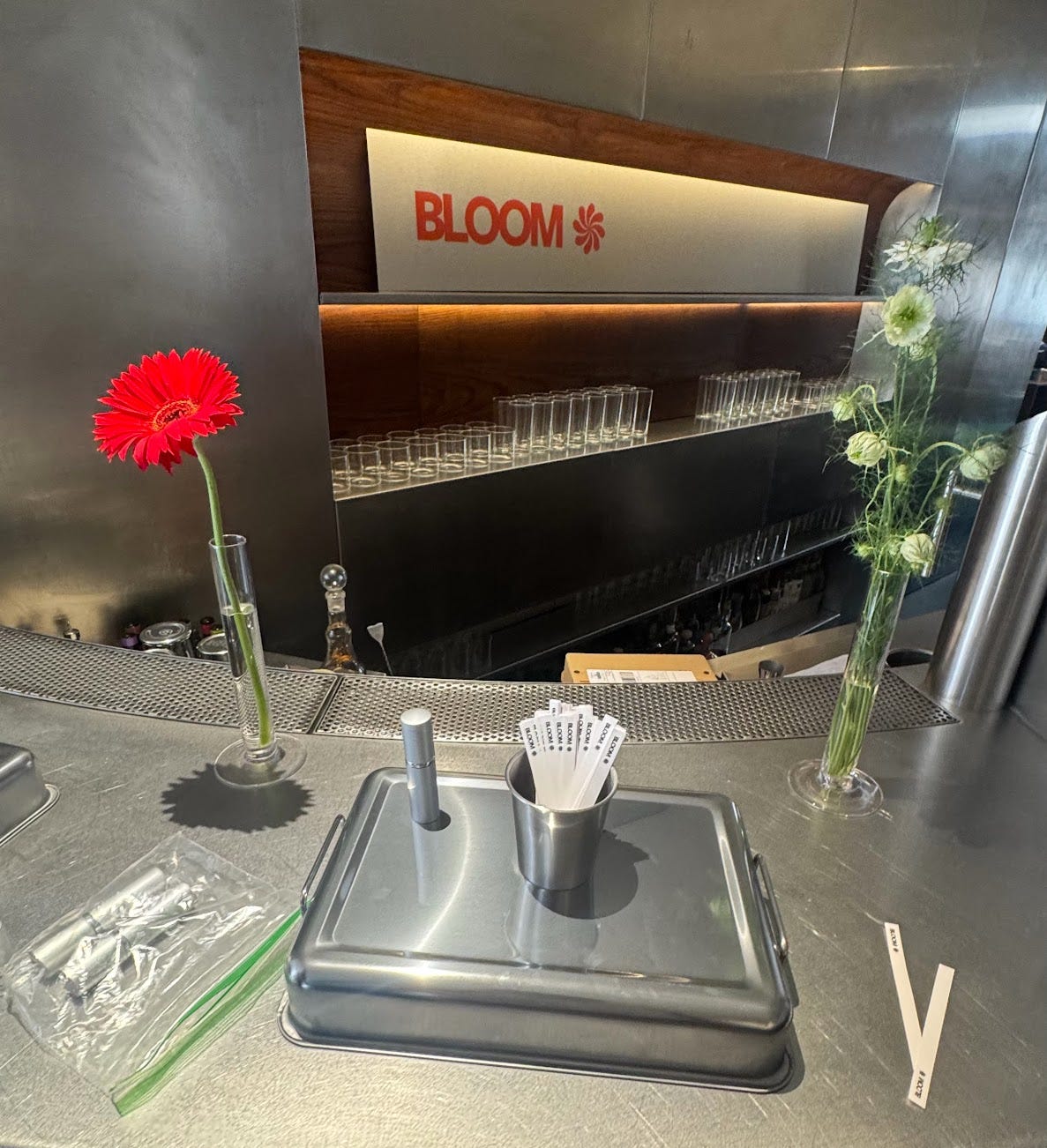
For the event, we set up a cannabis fragrance bar using the scents of the strains we’re launching and paired each terpene profile with a cocktail the team at Space Talk created. Because of strict regulations, we couldn’t give out Bloom samples, so we recreated the experience with terpenes and, ironically, alcohol.
Clinicians from across the UK came to try the fragrances and cocktails, and I had the chance to personally introduce them to the brand. I hadn’t spent time with pure medical cannabis providers in a long while—especially not a room full of them.
That’s where the contrast between the UK and US really hit me.
Overwhelmed budtenders vs. methodical clinicians
In the United States, budtender knowledge is often brand‑driven. It’s rarely grounded in formal research unless a company brings that research to them. Some budtenders study independently and care deeply about the science, but they don’t usually have access to the depth of information these clinicians see every day.
They’re also overwhelmed. A typical dispensary carries hundreds of SKUs from dozens of brands, and budtenders are expected to both know and sell them. Brands layer on incentive programs and promotions. Some shops ask budtenders to make social content on top of everything else.
All that noise leaves very little time to deepen their knowledge. The path of least resistance is to be prescriptive. If you walk in and say you need help sleeping, they’ll rattle off a few top‑of‑mind products and point you to whatever’s on sale or in stock. Sometimes that’s all the customer wants. But it’s a far cry from a structured, medical conversation.
Clinicians, by contrast, are methodical and consultative. They start with a series of questions—not just “What are you trying to treat?” but “What have you tried? How do you consume? What else are you taking?” They assign a treatment plan, track you over weeks, and adjust based on outcomes. Their knowledge base comes from medical literature and clinical practice. At our event, several of them casually referenced specific studies while explaining why they favored one ratio or route of administration over another.
Terpenes as a shared language

Terpenes are a useful lens for understanding that difference.
Most of us in cannabis know that terpenes give strains their signature smells—piney, fruity, cheesy—and help explain why different strains feel different. In the US, education often zooms in on individual terpenes and what they supposedly do. We love simple heuristics: limonene is “uplifting,” myrcene is “sedating,” linalool is “relaxing.” It’s an easy way to talk about complex chemistry.
The clinicians I spoke with approached terpenes differently. For them, individual terpenes mean little in isolation. What matters is the entire pattern of aromatic and bioactive compounds plus cannabinoids. Therapeutic properties come from the entourage effect—the way compounds work together—rather than one hero ingredient. Dominant terpenes are still a useful shorthand, but they sit inside a more holistic framework.
This is where our experience and their expertise started to meet. For the UK launch, we organized each strain around four pillars—dominant terpenes, cultivar cross, flavor notes, and the number of components in its terpene profile—and walked clinicians through why each one matters. They don’t traffic in “indica,” “sativa,” or “hybrid” at all, so this gave them an evidence‑based vocabulary to replace the folk taxonomy that still anchors most US education.
Where chemistry stops and subjectivity starts

Even so, I noticed the limits of a purely clinical approach when things turned subjective. When I asked clinicians how they guide patients toward one strain versus another, every answer started with terpenes and potential benefits—and then stopped. There wasn’t a clear framework beyond chemistry.
US budtenders, many of whom consume daily, have developed something clinicians haven’t: they know you have to use your nose. If a strain smells good to you, you’ll probably like it; if you like that one, there’s usually another nearby on the shelf that smells similar and will likely work for you too. You can’t chart that in a white paper—scent is subjective—but it’s a real heuristic that’s been validated over thousands of transactions.
The truth is that both sides are right. You need scientifically sound heuristics to understand what you’re consuming, and you also need sensory guidance—scent, flavor, even strain names—to figure out what actually works for you in the real world. The best cannabis guidance blends medical rigor with lived, everyday experience.
Why the UK feels ahead
The UK market isn’t bigger than the US or older than California, but it’s ahead in one crucial way: it treats cannabis knowledge as serious work. In London, clinicians approach the plant with a disciplined curiosity I haven’t felt since pre‑ICO California—before everything became packaging, potency, and promos.
In the US, we like to think of ourselves as seasoned veterans. We’ve logged the years, survived shifting regulations, and navigated a credit crisis. But a lot of our discourse is built on vibes, anecdotes, and marketing language repeated so often it starts to sound like fact.
Back at the Barbican innovation panel, Josh Cuby, co‑founder of Cantourage, framed that difference in a single phrase: “education is infrastructure.” That line has been stuck in my head ever since. In the US, that infrastructure is fragmented. Our rush toward commercialization has crowded out education, leaving an industry long on branding and short on shared standards of knowledge.
What brands and the industry can do
We don’t need a perfect solution to start fixing that. Brands can commit to producing research‑based, clinically informed materials and translating insights from medical markets like the UK into practical tools for consumers and frontline staff. That might look like better training decks, patient‑friendly explainers, or simple frameworks that connect what people feel to what they’re actually consuming.
At the industry level, we can engineer more cross‑pollination. A Cannabis Europa–style conference in a major US medical market like Florida could help reset the conversation around medical cannabis. Structured exchanges between European clinicians and American budtenders—whether through panels, fellowships, or just getting them into the same room—would accelerate learning on both sides of the counter.
That, to me, is the opportunity. As the industry matures, knowledge doesn’t have to be a competitive afterthought; it can be shared infrastructure that makes everyone better. Patients and consumers get clearer guidance and more control. Brands get smarter feedback loops. Regulators get a more informed ecosystem to work with.
We’re still early. But a week at the Barbican made one thing clear: if education is infrastructure, the UK is pouring concrete—and the rest of us should pay attention.
Cannabis is evolving quickly, and education is evolving with it. At Bloom, we believe the future of cannabis is built on trust, transparency, and products people can understand. Explore Bloom, read more from Casey, or find us near you.